No bots. No scalper listings. Just information.

Guides › Collector glossary

Collector glossary: the words collectors, shops and sellers use, explained

Raw, comp, case hit, allocation, SIR, dead box. Everyone talks as if these are obvious; they aren't. Here are 139 terms in plain English, with why each one matters when you're buying, for Pokémon, Lorcana, One Piece and Riftbound.

Each term has a tag

  • Official term used by a publisher or a grading company
  • Collector slang everyday hobby talk, not an industry standard
  • Condition term how a card's wear is described
  • Retail term how stores and marketplaces sell
  • On Printed Price what our own labels mean

Jump to Buying and pricing · Sealed product · Retail and drops · Rarity and collecting · Card condition · Grading · Pack and box risk · Community and slang · Labels on Printed Price · A to Z · Recent changes

Buying and pricing

The words people use when they talk about what something costs and what it's worth.

MSRP

Retail termAll games

Manufacturer's suggested retail price: the price the maker suggests, which we call the price on the box. It's a suggestion, not a limit; the FTC says a store "is free to set the retail price" (FTC).

Why it matters: It's the yardstick for a fair price. Stores can charge more, and some big ones have. See what Pokémon products should cost.

Related: At MSRP · Near MSRP · Premium

Market price

Retail termAll games

An estimate of what something sells for right now, based on recent sales, not asking prices. "TCGplayer market" means TCGplayer's version, built from sales on TCGplayer (TCGplayer).

Why it matters: Better than the cheapest listing, but it lags when prices move fast and gets shaky on rarely sold cards. It isn't MSRP. See how to check card prices.

Related: Comp · Floor · MSRP

Comp

Collector slangAll games

A recent sale of the same item, in the same version and condition, used to judge what it's worth. "Checking comps" means looking at sold listings.

Why it matters: Asking prices aren't market prices. Only completed sales of the exact version count: holo vs reverse holo, English vs Japanese, raw vs graded.

Related: Sold listings · Market price · Raw

Sold listings

Retail termAll games

Listings that actually sold. On eBay, tick Sold Items to see them; the standard view covers about the last 90 days (eBay).

Why it matters: The quickest honest check before you buy: what people really paid.

Related: Comp · BIN

Floor

Collector slangAll games

The lowest price something is listed for right now. Some people use it for the lowest recent sale.

Why it matters: The floor is the cheapest copy, not the going rate. Check condition, shipping and the seller first.

Related: Market price · Comp

Premium

Collector slangAll games

How much over MSRP you're paying, in dollars or as a percentage. Not to be confused with product names like Premium Collection.

Why it matters: Knowing the premium helps you decide whether to wait for a restock or a reprint.

Related: MSRP · Near MSRP · Reprint

BIN

Retail termAll games

Buy It Now: a fixed-price listing you can buy straight away instead of bidding (eBay).

Why it matters: A BIN price is what the seller wants. A wall of high BINs doesn't mean anything sells at those prices.

Related: OBO · Sold listings

OBO

Retail termAll games

Or best offer: the price is negotiable.

Why it matters: You can offer less, but the seller doesn't have to accept. On eBay an accepted offer isn't yours until you pay (eBay).

Related: BIN · Comp

Buylist

Retail termAll games

A store's list of what it will pay you for cards, usually less in cash than in store credit.

Why it matters: Buylist prices are wholesale, well under market price. They're what a store pays, not what a card is "worth".

Related: Market price · Bulk

Scalper

Collector slangAll games

Someone who buys up limited stock at retail to resell it at a much higher price.

Why it matters: Scalping is one reason drops can sell out in minutes, and why stores add limits, queues and drawings. Retailers themselves have been criticized for pricing well over MSRP (Kotaku).

Related: Flipper · Purchase limit · Drawing (lottery)

Sealed product

What's in the boxes. Mostly Pokémon names, since Pokémon has the most kinds; other games mostly sell packs, boxes and starter decks.

  1. Pack10 cards
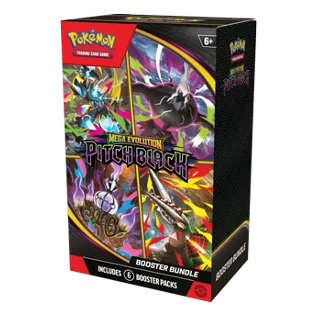
  2. Booster Bundle6 packs
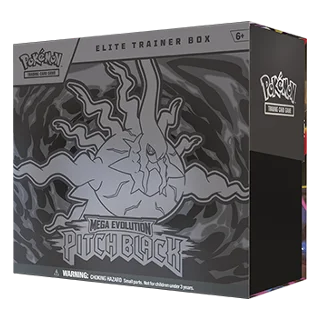
  3. ETB9 packs + extras
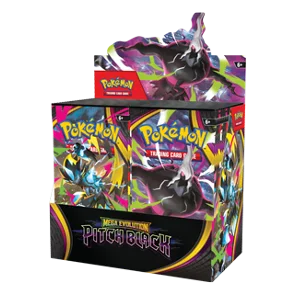
  4. Booster box36 packs
  5. Casea carton of boxes

Pokémon sizes shown, with Pitch Black boxes. Lorcana, One Piece and Riftbound boxes hold 24 packs.

Booster pack

Official termAll games

A sealed pack of random cards from one set. A Pokémon pack has 10 cards plus an Energy; Lorcana and One Piece packs have 12, Riftbound 14 (Pokémon, Bandai, Riot).

Why it matters: Every bigger product is mostly packs plus extras, so the pack price is the base for comparing.

Related: Booster box (display) · Booster Bundle · Loose pack

Elite Trainer Box (ETB)

Official termPokémon

Nine Pokémon booster packs plus a promo card, sleeves, dice, Energy cards and a storage box (Pokémon).

Why it matters: You pay about a dollar a pack more than a Booster Bundle for the extras.

Related: Pokémon Center ETB · Booster Bundle · Promo

Pokémon Center ETB

Official termPokémon

A Pokémon Center-exclusive version of an Elite Trainer Box, typically with additional packs and, on current releases, an additional Pokémon Center-stamped promo. Contents vary by release (Pokémon).

Why it matters: Only Pokémon Center sells it at MSRP. Anywhere else, it's resale.

Related: Elite Trainer Box (ETB) · MSRP

Booster box (display)

Official termAll games

A sealed box of packs from one set. Pokémon boxes hold 36 packs; Lorcana, One Piece and Riftbound boxes hold 24 (Pokémon, Bandai). Not every Pokémon set gets one; special sets often don't.

Why it matters: Usually the lowest MSRP per pack. Check the pack count when comparing prices.

Related: Case · Booster pack · MSRP

Case

Retail termAll games

The sealed carton of several boxes that distributors ship to stores. The count depends on the product; a 30th Celebration ETB case is 10, for example (PHD Games).

Why it matters: A "sealed case" should match the official count and show factory tape. A case doesn't promise any card.

Related: Booster box (display) · Case hit · Allocation

Blister

Official termPokémon

One to three packs in a clear plastic shell on a card backing, usually with a promo card and sometimes a coin.

Why it matters: More per pack than a bundle or box: you're paying for the promo.

Related: Booster pack · Promo

Collection box

Official termPokémon

A boxed product with a few packs plus promos and extras like a coin, pin or figure. They range from small collections to Premium and Ultra-Premium Collections (UPC), and contents vary a lot: a 30th Celebration UPC has 30 packs (PHD Games).

Why it matters: Read each one's official contents before comparing. See what Pokémon products should cost.

Related: Tin · Promo · MSRP

Tin

Official termPokémon

A metal tin with packs and usually a promo. Mini tins hold 2 packs; ex tins hold 4 or 5.

Why it matters: Mini tins are a cheap way into a set, but the price per pack varies.

Related: Collection box · Booster pack

Starter deck

Official termAll games

A ready-to-play deck for new players, often with a bonus pack. Lorcana and One Piece call them Starter Decks (Bandai); Riftbound has Champion Decks; Pokémon's closest are Battle Decks.

Why it matters: The cheapest way to start playing. Not aimed at chasing rare pulls.

Related: Prerelease · Booster pack

Loose pack

Collector slangAll games

A single pack sold on its own, often out of an opened box.

Why it matters: Convenient, but riskier than sealed boxes: loose packs can be searched or tampered with. Buy them from stores you trust.

Related: Searched packs · Weighed packs · Tampered pack

Wave

Collector slangAll games

A batch of product released or shipped together. Big releases can come in several waves on different dates.

Why it matters: Missing launch day doesn't mean missing the product. See the 30th Celebration's five waves.

Related: Restock · Reprint

Reprint

Official termAll games

The publisher printing more of a product that's already out. Bandai announced reprints of OP-13 and EB-03 in 2026, for example; The Pokémon Company promised more Prismatic Evolutions in 2025 (Wargamer).

Why it matters: An announced reprint can increase supply and put downward pressure on resale prices, so waiting may be worth considering. See why prices jump.

Related: Restock · Out of print (OOP) · Premium

Out of print (OOP)

Collector slangAll games

A product the publisher has stopped making. It's often a guess, since publishers rarely announce it.

Why it matters: Once a product is out of print, supply is whatever's left, and prices can move further from MSRP.

Related: Reprint · Sealed premium

Sealed premium

Collector slangAll games

When sealed product sells for more than the cards inside are likely to be worth.

Why it matters: Opening a box you paid a premium for may return less than you paid. It describes a common pattern, not a rule, and isn't investment advice.

Related: Out of print (OOP) · Investment grade

Retail and drops

How limited products reach buyers, and the ways stores sell them.

LGS

Collector slangAll games

Local game store: an independent shop that sells cards and runs events like prereleases and tournaments.

Why it matters: Game stores run events and pre-order lists, but often get far less stock than big chains (ICv2).

Related: Allocation · Prerelease · Vetted shop

Distributor

Retail termAll games

A wholesaler that buys from publishers and sells to stores. Most stores can't buy straight from the publisher (Bandai).

Why it matters: How much a distributor sends a store shapes what reaches your local shelf.

Related: Allocation · LGS

Allocation

Retail termAll games

The share of a limited product each store is given, often less than it ordered. Most distributors now work this way (ICv2).

Why it matters: Allocation is why your local store may get only a few boxes, and why pre-orders get cut.

Related: Pre-order · Distributor · LGS

Pre-order

Retail termAll games

Paying ahead, or reserving, so the product ships or is held for you on release day.

Why it matters: Often one of the best ways to get a popular product at MSRP, but stores sometimes get less than they ordered and cut or cancel orders (ICv2).

Related: Allocation · Window · Release date (street date)

Drop

Collector slangAll games

The moment a store puts limited stock up for sale, scheduled or not. Often a restock rather than a new release.

Why it matters: Drops can sell out in minutes. Knowing the time, and whether it uses a queue or a drawing, matters more than refreshing. See Windows.

Related: Queue (waiting room) · Drawing (lottery) · Restock

Window

Collector slangAll games

The limited time to act: to enter a drawing, join a queue or use a purchase link once you're picked.

Why it matters: Miss it and the chance is usually gone; purchase links can expire within a day (Riot).

Related: Open now · Drawing (lottery) · Invitation list

Queue (waiting room)

Retail termAll games

An online holding page that lets shoppers into a busy sale a few at a time (Queue-it). Pokémon Center has used one on big drops (Nintendo Soup).

Why it matters: Stay on the page and don't refresh, or you may lose your place.

Related: Drop · Window · Carted

Drawing (lottery)

Retail termAll games

A sale where buyers are picked at random from entries, as in Walmart's collectibles drawings (Walmart), Riot's merch drawings (Riot) and Premium Bandai's "Chance to Buy" (Premium Bandai).

Why it matters: Speed doesn't matter in a drawing. Enter during the window, and act quickly if you're picked.

Related: Window · Queue (waiting room) · Invitation list

Invitation list

Retail termAll games

A sale where you request an invite, and selected shoppers get a short-lived link to buy. Amazon uses these and says it can't grant every request (Amazon).

Why it matters: There's no known trick to improve your odds. Don't pay anyone for one.

Related: Drawing (lottery) · Window

In-store drop

Retail termAll games

Stock put out at physical stores, sometimes on a set day, with nothing to buy online.

Why it matters: There's nothing to tap, so timing and store policies matter. See Windows.

Related: Drop · Purchase limit · Release date (street date)

Restock

Retail termAll games

A store getting more of a sold-out product and putting it back on sale.

Why it matters: After launch day, restocks are one of the main ways to get sold-out product at MSRP. A restock isn't a reprint.

Related: Reprint · Drop · Sold out

Carted

Collector slangAll games

Got the item into your online cart during a drop.

Why it matters: Carted isn't bought. Most stores don't hold items in carts, so stock can sell out before you check out.

Related: Drop · Queue (waiting room)

Purchase limit

Retail termAll games

The most one customer may buy of an item or per order. Target's terms, for example, reserve the right to limit quantities per guest (Target).

Why it matters: Limits spread stock across more buyers, but they vary by store and aren't always enforced.

Related: Scalper · Drawing (lottery)

Release date (street date)

Retail termAll games

The day a product may go on sale. Bandai tells stores to "strictly adhere to release dates" (Bandai), and some games give game stores an earlier date than big chains.

Why it matters: Dates can differ by store type. See Releases.

Related: Prerelease · Confirmed · Pre-order

Release Event

Official termOne Piece

Bandai's store events around a One Piece or Gundam launch. For One Piece they run the week before release, and buying a box there can earn a bonus pack (Bandai).

Why it matters: One of the better chances at a box near MSRP. See One Piece at MSRP.

Related: Prerelease · Allocation

Rarity and collecting

What makes one card rarer, or more wanted, than another. Each game has its own names, so they're tagged by game.

Symbols: Pokémon and CGC.

Chase card

Collector slangAll games

The most wanted card or cards in a set, the ones people open packs hoping for.

Why it matters: Chase cards are a big part of what drives a set's sealed prices, and most packs won't have one. It's about demand, not just rarity. See Lorcana chase cards.

Related: Hit · Grail · Case hit

Grail

Collector slangAll games

A collector's personal dream card, the one they want most (Sports Illustrated).

Why it matters: It's personal, not a price tier. A seller calling a card a grail says nothing about whether the price is fair.

Related: Chase card · PC

Case hit

Collector slangAll games

Collector slang for a card believed or observed to appear roughly once per sealed case. It isn't a guaranteed rate unless the publisher explicitly says so.

Why it matters: A case can have none, or more than one. Riot, which publishes Riftbound rates, says they "are not guarantees" (Riot); Pokémon, Lorcana and One Piece publish none.

Related: Case · Hit · Dead box

Master set

Collector slangPokémon

Every card in a set, including every variant such as reverse holos and secret rares.

Why it matters: A master set costs far more than one copy of each card number. Check which a checklist or price means; people disagree on whether promos count.

Related: Reverse holo · Secret rare

Secret rare

Collector slangAll games

A card numbered past the set's printed total, like 116/084 (CGC). One Piece prints its own Secret Rare code (SEC); Pokémon now uses names like Hyper Rare instead (Pokémon).

Why it matters: A number above the set total is the quickest way to spot a top card in a photo. See how to find a set's secret rares.

Related: SIR (Special Illustration Rare) · Hyper Rare · SEC (Secret Rare)

Alt art

Collector slangAll games

Collectors' umbrella term for a version of a card with a different illustration from the standard one. Each game has its own official names, like Illustration Rare in Pokémon (Pokémon), parallel in One Piece and Showcase in Riftbound (Riot). Not the same as full art, which spreads the usual art across the whole card.

Why it matters: Two copies of the "same" card can be very different prices. Check which version a listing means.

Related: Parallel · Full art · IR (Illustration Rare)

Parallel

Official termAll games

Another version of the same card number with a different finish or art. In One Piece it usually means alternate art, not just foil (Bandai).

Why it matters: A parallel can cost many times the standard card with the same number.

Related: Alt art · SEC (Secret Rare)

Full art

Official termPokémon

A card whose artwork covers the whole face, not just the art box (CGC).

Why it matters: Full art isn't alt art: a Pokémon Ultra Rare is a full-art card, while Illustration Rares use new illustrations.

Related: Alt art · SIR (Special Illustration Rare)

Holo

Official termAll games

A card with holographic foil on its artwork.

Why it matters: Holo alone isn't a big pull anymore: every modern Pokémon pack has several foils.

Related: Reverse holo · Cold foil

Reverse holo

Official termPokémon

A Pokémon card with foil everywhere except the art box. Most cards in a set have one (CGC).

Why it matters: Usually cheap, but part of a master set, and a few are worth more than the standard version.

Related: Holo · Master set

Promo

Official termAll games

A card given out outside regular packs: in boxed products, at events or with a purchase. Pokémon promos carry a black star marked PROMO.

Why it matters: Promo doesn't mean rare. Box promos are made in volume; some event promos are scarce.

Related: Elite Trainer Box (ETB) · Collection box · Serialized

Serialized

Official termAll games

A card stamped with its own number from a fixed run, like 01/25. Lorcana plans 23 serialized copies of each Illustrious card per set (Disney Lorcana).

Why it matters: Check the number is printed by the publisher. A collector number like 199/198 isn't a serial number.

Related: Secret rare · Promo

IR (Illustration Rare)

Official termPokémon

An alternate-art Pokémon card with a full illustration, marked with one gold star (Pokémon).

Why it matters: A main collecting tier. Many are cheap; the popular Pokémon carry the price.

Related: SIR (Special Illustration Rare) · Alt art · Secret rare

SIR (Special Illustration Rare)

Official termPokémon

An alternate-art version of a Pokémon ex or Supporter, marked with two gold stars (Pokémon, CGC).

Why it matters: Often among a set's top chase cards. Two stars alone don't make an SIR; the color matters (see the symbols above).

Related: IR (Illustration Rare) · Hyper Rare · Chase card

Hyper Rare

Official termPokémon

Gold cards marked with three gold stars, what older sets called secret rares (Pokémon). The Mega Evolution era adds Mega Hyper Rares.

Why it matters: Not always the priciest card in a set: SIRs can sell for more.

Related: SIR (Special Illustration Rare) · Secret rare

ACE SPEC

Official termPokémon

Powerful Trainer and Energy cards limited to one per deck, with their own rarity since Temporal Forces (Pokémon).

Why it matters: A gameplay rule first. The rarity label doesn't make a card valuable.

Related: Double Rare

Enchanted

Official termLorcana

Borderless alternate-art Lorcana cards with a rainbow "inkwash" foil, numbered past the main set (Disney Lorcana).

Why it matters: Long Lorcana's chase tier; since Fabled, Iconic sits above it. See Lorcana chase cards.

Related: Iconic · Epic · Chase card

Iconic

Official termLorcana

Lorcana's rarest pack tier: two per set, with full-card art and 3D hot stamping (Disney Lorcana).

Why it matters: Disney Lorcana calls them far less common than Enchanted, and prices tend to reflect that.

Related: Enchanted · Epic

Epic

Official termLorcanaRiftbound

In Lorcana, 18 frameless rainbow-foil cards per set, rarer than Legendary but not Enchanted (Disney Lorcana). In Riftbound, Epic is a regular rarity above Rare (Riot).

Why it matters: Same word, different meaning by game. Check which game a listing is for.

Related: Legendary · Enchanted · Showcase

Legendary

Official termLorcana

The top of Lorcana's original rarities, found in a pack's rare slots (Disney Lorcana).

Why it matters: Often the playable chase, but not the rarest: Epic, Enchanted and Iconic are all rarer.

Related: Epic · Enchanted

Cold foil

Official termLorcana

The finish on Lorcana's regular foils: the foil is printed over the card, which reduces curling (ComicBook).

Why it matters: A finish, not a rarity. Any card can turn up as a foil.

Related: Holo · Enchanted

SEC (Secret Rare)

Official termOne Piece

One Piece's top regular rarity, printed on the card next to its number, like OP17-118 (Bandai).

Why it matters: Often among a set's most valuable regular pulls, but special versions like SP, TR and manga art can sell for more.

Related: SP (Special) · Treasure Rare (TR) · Manga Rare

SP (Special)

Official termOne Piece

An earlier card reprinted in a later set with new, often striking art. Bandai lists them as Specials (Bandai). Gundam uses SP the same way.

Why it matters: Check the set code and number to know which printing you're buying.

Related: SEC (Secret Rare) · Parallel

Manga Rare

Collector slangOne Piece

Collectors' name for top One Piece art versions drawn as manga panels. Bandai calls the newest ones Super Alt-Art, "covered with designs from the ONE PIECE manga" (Bandai).

Why it matters: Often among a set's most expensive cards, but listings label them inconsistently. Check the card number and photos.

Related: SEC (Secret Rare) · Parallel · Chase card

Treasure Rare (TR)

Official termOne Piece

A special-treatment One Piece rarity marked TR (Bandai). Not every set has one.

Why it matters: Confirm the TR mark before paying a TR price.

Related: SEC (Secret Rare) · SP (Special)

DON!! cards

Official termOne Piece

One Piece's resource cards: each player has a separate 10-card DON!! deck (Bandai). Special-finish versions are collected.

Why it matters: A gold or foil DON!! plays the same as any other; the value is cosmetic.

Related: SP (Special) · Parallel

Showcase

Official termRiftbound

Riftbound's collector versions: alternate art, Overnumbered and Signature cards. They play exactly like the standard card (Riot).

Why it matters: TCGplayer files all three under Showcase, so it's the filter to use when hunting Riftbound chase cards.

Related: Overnumbered · Signature · Alt art

Overnumbered

Official termRiftbound

Artist-illustrated Riftbound cards numbered past the set total, with extra foil treatments (Riot).

Why it matters: Among the hardest Riftbound pulls. Riot's published rates are averages, not guarantees.

Related: Signature · Showcase · Secret rare

Signature

Official termRiftbound

An Overnumbered card with a foil copy of the artist's signature, printed at the factory, not hand-signed (Riot). Its number carries an asterisk, like 189*/166.

Why it matters: Riftbound's top pulls. Check the listing shows the signature and the asterisk.

Related: Overnumbered · Showcase
Card condition

How marketplaces describe a raw card. There's no single industry standard; these follow TCGplayer's, the one most US shops use.

  1. NMNear Mint
  2. LPLightly Played
  3. MPModerately Played
  4. HPHeavily Played
  5. DMGDamaged

Near Mint (NM)

Condition termAll games

A card that looks almost unplayed. Small flaws from handling or the factory are allowed, like a little edge wear or a minor scratch, so NM doesn't mean perfect (TCGplayer).

Why it matters: Most price guides quote the NM price. A played copy listed at that price is overpriced.

Related: Lightly Played (LP) · Mint · Pack fresh

Lightly Played (LP)

Condition termAll games

Visible handling or play wear, but nothing major: minor edge wear, scratches or a small bend (TCGplayer).

Why it matters: LP copies usually cost less than NM and look fine in a binder or a deck. They rarely suit grading.

Related: Near Mint (NM) · Moderately Played (MP) · Binder copy

Moderately Played (MP)

Condition termAll games

Obvious wear from use, such as worn edges, scuffing or bends, on a card that's still whole (TCGplayer).

Why it matters: Fine for play. Don't pay anything near NM for it.

Related: Lightly Played (LP) · Heavily Played (HP)

Heavily Played (HP)

Condition termAll games

Heavy wear all over, on a card that's still usable and recognizable (TCGplayer).

Why it matters: Bought for play or nostalgia, not for resale.

Related: Moderately Played (MP) · Damaged (DMG)

Damaged (DMG)

Condition termAll games

Tears, creases that break the card, water damage, missing text or a major miscut. Some factory flaws count too: TCGplayer treats crimped cards as Damaged (TCGplayer).

Why it matters: A card straight from a pack can still be Damaged, so "never played" doesn't rule it out.

Related: Crimp · Pack fresh

Mint

Condition termAll games

Essentially flawless. TCGplayer's top condition for raw cards is Near Mint; "Mint" and "Gem Mint" mean something only on a grading company's label (TCGplayer, PSA).

Why it matters: "Mint" in a raw listing is the seller's opinion, not a standard.

Related: Near Mint (NM) · Gem Mint · Raw

Whitening

Condition termAll games

White specks or lines where the colored ink has worn away, usually on the back edges and corners (TCGplayer).

Why it matters: The most common reason a "pack fresh" card loses value or misses a 10. Ask for photos of the back.

Related: Edge and corner wear · Pack fresh · PSA 10

Centering

Condition termAll games

How evenly the border surrounds the picture, written as a ratio like 55/45. It's set at the factory. TCGplayer ignores it up to 70/30 for raw conditions (TCGplayer), and grading standards vary by company and grade (CGC, PSA).

Why it matters: No one can fix centering, and even an otherwise clean card can miss a top grade because it's visibly off-center.

Related: PSA 10 · Gem Mint · Pristine 10 (CGC, TAG)

Print line

Condition termAll games

A thin straight line left by the printing process, often on foil cards. It's a factory flaw, also called a roller line (TCGplayer).

Why it matters: Factory flaws can still affect a grade; how much depends on the grader, the severity and the card.

Related: Pack fresh · PSA 10

Surface wear

Condition termAll games

Scratches, scuffs, dents and grime on the face or back. A dent that shows through to the other side rules out Near Mint (TCGplayer).

Why it matters: Surface flaws hide in photos. Ask for an angled shot under light.

Related: Holo scratching · Near Mint (NM)

Edge and corner wear

Condition termAll games

Fraying, nicks, color loss and soft or rounded corners. TCGplayer counts corners as part of the edges (TCGplayer).

Why it matters: Edges and corners are common grading criteria, and one soft corner can cost a top grade.

Related: Whitening · Subgrades (BGS)

Holo scratching

Condition termAll games

Fine scratches on the shiny foil, usually visible only when the card is tilted under light (TCGplayer).

Why it matters: Foil scratches easily, even in new packs. Ask for a tilted photo before paying an NM price.

Related: Surface wear · Pack fresh

Pack fresh

Collector slangAll games

A seller's phrase for a card that went from the pack straight into a sleeve.

Why it matters: It describes where the card came from, not its condition. Centering, print lines, whitening and crimps can all come from the factory (TCGplayer).

Related: Near Mint (NM) · Crimp · Pull

Crimp

Condition termAll games

The ridged seal at the top and bottom of a booster pack. A crimped card got caught in that seal at the factory and has a pressed, wavy edge. TCGplayer treats crimped cards as Damaged (TCGplayer).

Why it matters: On a sealed pack, a crimp that looks uneven or glued is a warning sign of tampering.

Related: Damaged (DMG) · Tampered pack

Grading

When a company scores a card and seals it in a case. Each company has its own scale, so a "10" isn't always the same thing.

TCG collector glossary: card terms explained | Printed PriceGRADER10CERT 0000 00001234
  1. The grade. Which company, which number, and which name for it: a 10 can be Gem Mint or Pristine.
  2. The certificate number. Look it up on the grader's own site before you buy.
  3. The card, sealed inside. Once it's taken out, the grade no longer counts.
  4. The case. Cracks, gaps or a label that looks off are warning signs.

Raw

Collector slangAll games

A card that hasn't been graded or sealed in a grading company's case (Ludex).

Why it matters: A raw card's condition is the seller's opinion. Judge it from photos and the return policy.

Related: Slab · Near Mint (NM) · Grading

Grading

Official termAll games

Sending a card to a company such as PSA, CGC, Beckett (BGS) or TAG, which scores its condition from 1 to 10 and seals it in a labeled case (PSA, CGC).

Why it matters: A high grade can multiply a card's price, but grading costs money and takes weeks or months, so it rarely pays on cheap cards.

Related: Slab · PSA 10 · Grading fees and tiers

Slab

Collector slangAll games

The sealed plastic case a grading company puts a card in, with a label showing the grade and a certificate number. Also used for the graded card itself.

Why it matters: Check the cert number on the grader's own site. Fake slabs and altered labels exist; a seller was convicted in 2026 of selling cards with forged PSA grades (US Attorney, SDNY).

Related: Grading · Raw · Crack (a slab)

Gem Mint

Official termAll games

A top grade name whose number depends on the company: a 10 at PSA, a 9.5 at Beckett, and a 10 that ranks below Pristine 10 at CGC and TAG (PSA, CGC, TAG).

Why it matters: Compare prices only within the same company and the same grade.

Related: PSA 10 · Pristine 10 (CGC, TAG) · Black Label

PSA 10

Official termAll games

PSA's top grade, GEM-MT 10, on its 1 to 10 scale (9 is MINT, 8 NM-MT, 7 NM). PSA calls a 10 "virtually perfect" and allows a slight print flaw and about 55/45 centering (PSA).

Why it matters: PSA 10 copies often sell for many times the raw price, which is why the cert number matters. A grade with a qualifier, like "8 OC" for off-center, sells for less than a plain 8.

Related: Gem Mint · Centering · Population report (pop)

Subgrades (BGS)

Official termAll games

Beckett (BGS) can print four scores on its label: centering, corners, edges and surface. The overall grade isn't an average; the lowest subgrade holds it down (Beckett).

Why it matters: Subgrades show which flaw held a card back, which helps when comparing two copies with the same grade.

Related: Black Label · Edge and corner wear · Centering

Black Label

Official termAll games

A Beckett Pristine 10 where all four subgrades are 10, shown on a black label. A Pristine 10 with one 9.5 subgrade isn't a Black Label (Beckett).

Why it matters: Black Labels sell for a big premium over other 10s. Check the label color and all four numbers.

Related: Subgrades (BGS) · Gem Mint

Pristine 10 (CGC, TAG)

Official termAll games

CGC and TAG each have two 10s. Pristine 10 is virtually flawless with near-perfect centering; Gem Mint 10 falls just short (CGC, TAG).

Why it matters: A "10" isn't one grade at these companies. Read which 10 is on the label.

Related: Gem Mint · Centering

TAG

Official termAll games

A grading company that scores cards out of 1,000 with imaging, then turns the score into a 1 to 10 grade. Each slab comes with a public image report (TAG).

Why it matters: The score shows whether a 10 is a high 10 or a low one. eBay's Authenticity Guarantee currently names PSA, SGC, CGC and Beckett, not TAG (eBay).

Related: Grading · Pristine 10 (CGC, TAG)

Population report (pop)

Official termAll games

A grading company's public count of how many copies of each card it has graded, at each grade (PSA).

Why it matters: A low count can support a high price, but it counts graded copies only. Most cards are never graded, so it isn't how many exist.

Related: PSA 10 · Grading

Crossover

Official termAll games

Sending a card still in one company's slab to another company, which moves it into its own case only if it meets a grade you set (PSA).

Why it matters: A crossover can fail, and the fee may be charged anyway (CGC).

Related: Crack (a slab) · Slab

Crack (a slab)

Collector slangAll games

Breaking a graded card out of its case to resubmit it, hoping for a higher grade.

Why it matters: Once it's out, the old grade no longer counts; PSA treats it as never graded (PSA). "Cracked from a 10" means it's raw now.

Related: Slab · Raw · Crossover

Sequential (slabs)

Collector slangAll games

Graded cards with consecutive certificate numbers, usually graded together and sold as a matched set.

Why it matters: Some sellers charge extra for a sequential set. The numbers say nothing about condition or rarity.

Related: Slab · Population report (pop)

Grading fees and tiers

Official termAll games

Graders charge per card, more for faster service and higher declared values. Tiers and prices change often: PSA added and renamed tiers in September 2026 (ICv2).

Why it matters: Check the grader's own page on the day you send cards, and compare the fee with what the grade would add.

Related: Grading · PSA 10

Pack and box risk

Words for the ways sealed product goes wrong, and how to protect yourself.

Weighed packs

Collector slangPokémon

Packs someone weighed to guess which ones hold heavier foil cards, keeping the heavy ones and leaving the rest. Pack weighing has been used to sort packs in some eras, sets and printings; whether it works varies. Some stores ban scales (Kotaku).

Why it matters: It's one reason loose packs from unknown sellers deserve more scrutiny. See Japanese vs English Pokémon for more.

Related: Searched packs · Loose pack · Tampered pack

Searched packs

Collector slangAll games

Packs someone has inspected without opening them, by feel, light or weight, to pick out the ones with a hit. Some shops in Japan now cut packs at the register, and Pokémon Centers there remove box wrap, to stop resellers (Screen Rant).

Why it matters: Buying loose packs from an unknown seller can mean buying the ones already judged duds. Sealed boxes from authorized stores avoid that.

Related: Weighed packs · Mapped box · Loose pack

Resealed

Retail termAll games

A box or pack that was opened, usually to take the good cards, then rewrapped to look new. Factory sealed means the original, unbroken seal (Kanto Post).

Why it matters: Big discounts from unknown sellers are the usual warning sign. Packaging varies by product: compare the wrap, seals and crimps with known genuine examples, and remember one unusual detail by itself doesn't prove resealing. eBay's Authenticity Guarantee doesn't cover sealed boxes (eBay).

Related: Tampered pack · Dead box · MSRP

Tampered pack

Retail termAll games

A pack that was opened or slit and resold as sealed, usually with the best card swapped out (Dexerto).

Why it matters: Check for even, machine-pressed crimps, cuts or glue. Buy loose packs only from stores you trust.

Related: Resealed · Crimp · Searched packs

Dead box

Collector slangAll games

A booster box that, once opened, had no big hits, or far fewer than people expect.

Why it matters: Pulls vary a lot from box to box, and most publishers don't promise a number of hits. A dead box is usually bad luck, not proof of tampering; check the wrap and packs instead.

Related: Hit · Resealed · Case hit

Mapped box

Collector slangAll games

A box whose packs follow a predictable pattern, so someone who knows it can tell which packs hold the rare cards. Players reported it in early Pokémon Sun & Moon boxes in 2017 (Kotaku).

Why it matters: When a product is mapped, sellers of loose packs can pull the good ones first. Another reason to buy sealed.

Related: Searched packs · Loose pack

God pack

Collector slangPokémon

Collectors' name for a rare Pokémon pack where every card, or nearly every card, is a high rarity. We found no published odds for them in physical packs.

Why it matters: They're a surprise, not a feature. A listing selling a pack as a likely god pack is a red flag.

Related: Hit · Searched packs

Rip-and-ship

Collector slangAll games

A livestream where you buy packs, watch the host open them, and the host mails you the cards, often just the hits (Card Codex).

Why it matters: You never hold the sealed pack, so you rely on the host's honesty, and per-pack prices are usually above MSRP.

Related: Break · Rip · MSRP

Repack

Retail termAll games

A mystery product made by a third party, not the publisher, that bundles loose cards, packs or slabs. GameStop's Power Packs were $60 for contents Kotaku valued at about $30 (Kotaku).

Why it matters: The seller sets the odds and the contents. A repack isn't factory sealed, and eBay limits repacks to approved sellers (eBay).

Related: Resealed · Break

Community and slang

What you'll hear in shops, streams and trade posts.

Rip

Collector slangAll games

To open packs, a box or a case.

Why it matters: Opening videos make big pulls look common. What gets posted is the exciting part, not a fair sample.

Related: Pull · Hit · Rip-and-ship

Pull

Collector slangAll games

To get a card from a pack you opened; "a pull" is the card itself.

Why it matters: "Pulled it myself" suggests a fresh card, but it isn't a condition. See pack fresh.

Related: Pack fresh · Hit · Rip

Hit

Collector slangAll games

A valuable or high-rarity card in a pack or box, the kind people hope to pull (Ludex). What counts depends on the game and set.

Why it matters: Publishers rarely publish hit rates. "Guaranteed hits" from a reseller is a red flag unless the product itself promises them.

Related: Chase card · Case hit · Dead box

Break

Collector slangAll games

A livestreamed opening where buyers each pay for a spot, such as a pack or a share of a case, and get the cards that match it (Baseball America).

Why it matters: You're paying for a share of an outcome, not a product. eBay allows breaks only from approved sellers (eBay).

Related: Rip-and-ship · Repack

Binder copy

Collector slangAll games

A copy bought to display in a binder, usually raw and in decent but not top condition.

Why it matters: If it's only for your binder, a Lightly Played copy can save a lot over NM or graded.

Related: Lightly Played (LP) · Raw · PC

PC

Collector slangAll games

Short for personal collection: the cards a collector keeps and doesn't plan to sell (Ludex).

Why it matters: "It's PC" in a trade post means not for sale.

Related: Grail · Trade bait

Trade bait

Collector slangAll games

A card someone keeps mainly to trade for something they actually want.

Why it matters: Price-check trade bait yourself. Its value to the other person is in trading it away.

Related: PC · Comp

Whale

Collector slangAll games

A collector who spends very large amounts.

Why it matters: One big buyer can set a record price. A single record sale doesn't mean every copy is worth that.

Related: Comp · Grail

Flipper

Collector slangAll games

Someone who buys cards or sealed product mainly to resell quickly at a profit (Ludex).

Why it matters: Resale asking prices may be far above MSRP, and may not reflect what completed sales actually clear at.

Related: Scalper · MSRP

Bulk

Collector slangAll games

Low-value cards, mostly commons and uncommons, traded by the hundred or thousand rather than one by one (TCGplayer).

Why it matters: "What this box is worth" estimates often count bulk, which sells for very little.

Related: Hit · Buylist

Playset

Collector slangPokémonLorcanaOne PieceRiftbound

The most copies of one card a deck allows: four in Pokémon, Lorcana and One Piece, three in Riftbound (Riot).

Why it matters: When a seller lists a playset, check the count matches your game.

Related: Bulk

Penny sleeve, toploader, one-touch

Collector slangAll games

A penny sleeve is a cheap, thin sleeve. A toploader is a rigid holder the sleeved card slides into. A one-touch is a magnetic display case. Card savers are semi-rigid holders, and PSA asks for those, not toploaders, for grading (PSA).

Why it matters: Most damage happens between the pack and the binder. A sleeve plus a toploader is the cheap default.

Related: Pack fresh · Grading

Investment grade

Collector slangAll games

A phrase sellers borrow from finance, where it's a credit rating for bonds (Investor.gov), to suggest a card or box is a safe store of value.

Why it matters: No one rates trading cards that way. Prices can fall; see why prices jump.

Related: Sealed premium · Grail

Labels on Printed Price

What the labels on Releases, Windows and Deals mean.

Confirmed

On Printed PriceAll games

The publisher has given the date on its own site or channels.

Why it matters: The safest date to plan around. See Releases.

Related: Expected · Rumor · Date TBA

Expected

On Printed PriceAll games

Trade press or a distributor reports the date; the publisher hasn't confirmed it yet.

Why it matters: Useful for planning, but not publisher-confirmed, and it may move.

Related: Confirmed · Rumor

Rumor

On Printed PriceAll games

The date comes from retailer listings, leaks or reports. It may change, or the product may not come out.

Why it matters: Good for knowing what might be coming. Don't pay for anything based on a rumor alone.

Related: Expected · Pre-order

Date TBA

On Printed PriceAll games

The product is announced, but without a date yet. Some pages show this as "Not announced".

Why it matters: There's no confirmed date to plan around yet.

Related: Confirmed · Expected

Opens (date)

On Printed PriceAll games

The window has a known start time, shown in your time zone.

Why it matters: Be signed in to the store before it opens.

Related: Open now · Window

Looks close

On Printed PriceAll games

Nothing has opened yet, but past releases suggest a window is near.

Why it matters: A heads-up, not a promise. Watch for it to change to Open now.

Related: Upcoming · Open now

Upcoming

On Printed PriceAll games

A window that's coming but isn't near yet.

Why it matters: The buying window hasn't opened yet.

Related: Looks close · Opens (date)

Closed

On Printed PriceAll games

The window has ended.

Why it matters: The product may still show up later on Deals or in stores.

Related: Sold out · Window

Sold out

On Printed PriceAll games

The store has no stock left, for now. Also written OOS, out of stock.

Why it matters: Restocks can happen, often without notice.

Related: Restock · Closed

Near MSRP

On Printed PriceAll games

A little above MSRP, within our fair-price limit: up to 5% or $10 over, whichever is more, and never more than a quarter over.

Why it matters: The item price stays within our published fair-price threshold.

Related: At MSRP · MSRP · Premium

Fair-price inventory

On Printed PriceAll games

Products for sale at or near MSRP right now from vetted shops. Each one is a qualifying listing.

Why it matters: The quickest way to see what you can actually buy at a fair price today.

Related: At MSRP · Near MSRP · Vetted shop

Vetted shop

On Printed PriceAll games

A shop we've reviewed before listing it on Deals. How we choose shops explains what we check and what takes a shop off. No one pays to be listed.

Why it matters: A vetted shop is a lead, not a guarantee. We review shops before listing them, but inventory, price and policies can change between checks. Confirm the current listing on the shop's own page before buying.

Related: Fair-price inventory · LGS

Import (Japan price)

On Printed PriceAll games

A product made for another country, usually Japan. We show its Japan price, never a US MSRP, and don't judge it against one.

Why it matters: Imports carry shipping and markups. Tournament language rules vary by game, region and event, so check the publisher's or organizer's rules before buying an import for competitive play. See Japanese vs English Pokémon.

Related: MSRP · Resealed

Sold and shipped by

On Printed PriceAll games

On big store sites like Walmart, Amazon and Target, other sellers can list products too. This line shows who you're really buying from.

Why it matters: Marketplace sellers on those sites often charge far more than the store itself.

Related: MSRP · Scalper · Store report card

Store report card

On Printed PriceAll games

Our scores for big stores: how Walmart, Pokémon Center, Amazon, Target, GameStop and others treat online buyers of sealed cards, out of 100, with sources.

Why it matters: Tells you which stores make it easy to buy fairly, and which don't.

Related: Sold and shipped by · Queue (waiting room)

Recently released

On Printed PriceAll games

Out in the last 30 days.

Why it matters: Prices can be volatile in the first weeks, while initial stock and later waves reach stores.

Related: Wave · Restock

A to Z

A ACE SPEC · Allocation · Alt art · At MSRP

B BIN · Binder copy · Black Label · Blister · Booster box (display) · Booster Bundle · Booster pack · Break · Bulk · Buylist

C Carted · Case · Case hit · Centering · Chase card · Closed · Cold foil · Collection box · Comp · Confirmed · Crack (a slab) · Crimp · Crossover

D Damaged (DMG) · Date TBA · Dead box · Distributor · DON!! cards · Double Rare · Drawing (lottery) · Drop

E Edge and corner wear · Elite Trainer Box (ETB) · Enchanted · Epic · Expected

F Fair-price inventory · Flipper · Floor · Full art

G Gem Mint · God pack · Grading · Grading fees and tiers · Grail

H Heavily Played (HP) · Hit · Holo · Holo scratching · Hyper Rare

I Iconic · Import (Japan price) · In-store drop · Investment grade · Invitation list · IR (Illustration Rare)

L Legendary · LGS · Lightly Played (LP) · Looks close · Loose pack

M Manga Rare · Mapped box · Market price · Master set · Mint · Moderately Played (MP) · MSRP

N Near Mint (NM) · Near MSRP

O OBO · Open now · Opens (date) · Out of print (OOP) · Overnumbered

P Pack fresh · Parallel · PC · Penny sleeve, toploader, one-touch · Playset · Pokémon Center ETB · Population report (pop) · Premium · Pre-order · Prerelease · Print line · Pristine 10 (CGC, TAG) · Promo · PSA 10 · Pull · Purchase limit

Q Queue (waiting room)

R Raw · Recently released · Release date (street date) · Release Event · Repack · Reprint · Resealed · Restock · Reverse holo · Rip · Rip-and-ship · Rumor

S Scalper · Sealed premium · Searched packs · Secret rare · SEC (Secret Rare) · Sequential (slabs) · Serialized · Showcase · Signature · SIR (Special Illustration Rare) · Slab · Sold and shipped by · Sold listings · Sold out · SP (Special) · Starter deck · Store report card · Subgrades (BGS) · Surface wear

T TAG · Tampered pack · Tin · Trade bait · Treasure Rare (TR)

U Upcoming

V Vetted shop

W Wave · Weighed packs · Whale · Whitening · Window

Recent changes

  • : Published with 139 terms.

Sources are linked where an official or external reference is available. Where no official definition exists, as with most collector slang, the entry describes common hobby use. This glossary explains words; it isn't investment advice. Pull rates aren't given: Pokémon, Lorcana and Bandai don't publish them, and Riot calls its own averages, not guarantees.