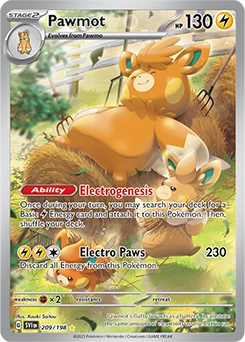
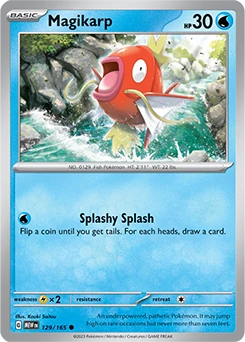
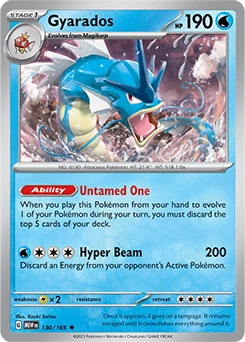
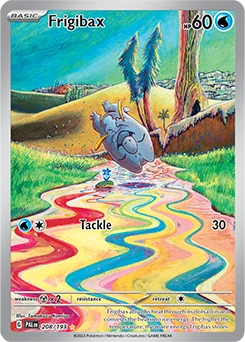
One work per illustrator. Tap a card to see it up close; tap a name to read about them. Images: Pokémon.
A Pokémon card can catch your attention before you read a single attack: the setting, the expression, the sense that you have interrupted a small creature going about its day. Start with the illustrator's name. It gives you another route through the cards, one that connects different Pokémon, expansions and kinds of artwork.
By Printed Price · Published and last updated
In short
Read the illustrator credit as well as the Pokémon's name. It is printed on the card.
Use artist interviews to understand how work was made. A picture alone cannot establish the tools or intentions behind it.
Start with one page of favorites. You do not need every card by an artist.
Covers
Discovering Pokémon TCG illustrators, documented examples, collecting for the artwork.
Doesn't cover
An exhaustive artist directory, card prices, or a ranking of the “best” artists.
01
Find the person behind the picture
When you find a card you like, note its name, expansion, collector number and illustrator. The Pokémon's name alone does not identify the artwork you mean.
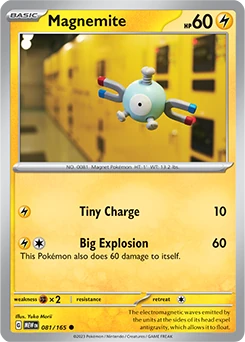
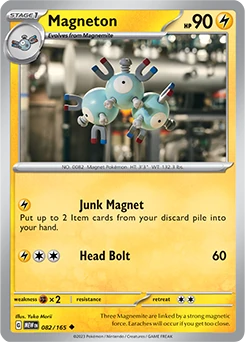
The illustrator is credited on the card itself, in the lower-left corner as “Illus.” followed by a name. Pokémon's official image of Magnemite, number 081/165 in Scarlet & Violet—151, carries the credit “Illus. Yuka Morii”. [1] That gives you a specific work to look up, rather than an open-ended search for “Magnemite art.”
Keep the spelling shown in the credit. Once you have a name, search for it alongside the expansion or Pokémon you already know, and you may find more of that person's work.
Our glossary covers set symbols and set codes, alt art and full art. Those terms help you identify and discuss a version. They do not tell you how much you will enjoy its picture.
Illus. creditNumber · set
Illus. Yuka Morii · Image: PokémonMagnemite 081/165, Scarlet & Violet—151. The credit sits just above the set mark and number.
Try thisChoose three cards you already like and read their credits. You might find one artist behind several favorites, or three very different approaches that happen to appeal to you.
02
The illustrators
Thirteen illustrators, chosen from Pokémon's own interviews, contest judges page and printed credits. Starting points, not a ranking. The looking prompts are our suggestions, not claims about what an artist intended.
My philosophy is to draw illustrations that will make users truly feel the presence of Pokémon.
In the same interview, Saitou says he draws Pokémon going about their daily lives in their natural habitats, and that the sense of air and the amount of light are two main elements that show a Pokémon is there [3].
Look forWhere would you imagine standing in the scene? What makes the surroundings feel close, distant, open or enclosed?
If I keep doing the same thing for too long, I get bored.
In an official interview, Komiya says he mainly uses acrylic gouache, touched up with pencils, colored pencils, ballpoint pens and markers, and likes markers for bold, strong black lines [3]. That is his account of his materials, not a claim about every card.
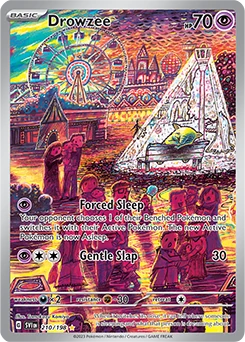
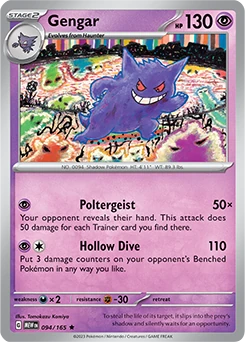
Look forLook at Drowzee, Frigibax and Gengar. What do the pose and expression suggest? Compare them with another artist's take on a Pokémon you know well.
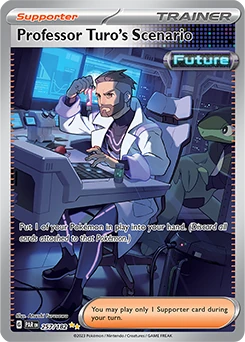
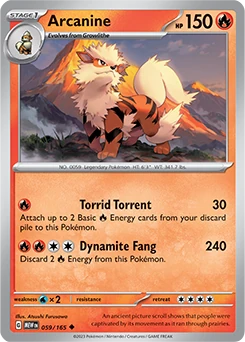
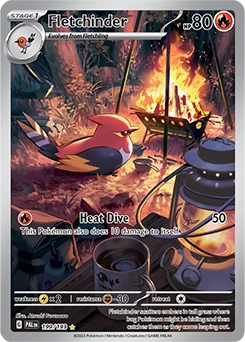
Professor Turo's Scenario · 257/182Paradox Rift · Special Illustration RareArcanine · 059/165Scarlet & Violet—151Fletchinder · 199/193Paldea Evolved · Illustration Rare
Illus. Atsushi Furusawa · Images: Pokémon
Plate 03 · One picture from research to completion
Atsushi Furusawa
…try to remember why you wanted to draw that Pokémon in the first place.
A contest-site process interview follows Furusawa's Arcanine from Scarlet & Violet—151, number 059 on the official checklist [4][5]. He describes reading Pokédex entries, drawing two drafts and having one reviewed before the final art; the draft with a mountain in the background was chosen. The judges page adds that he has illustrated for the TCG since 2021 [7].
Look forRead the process article ↗, then return to the finished card. Which decisions can you now recognize that you would have overlooked?
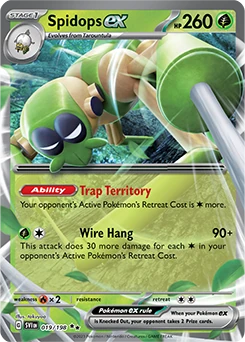
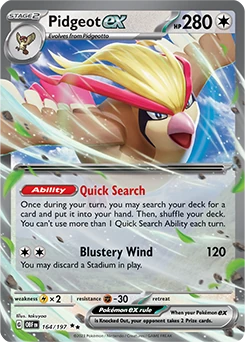
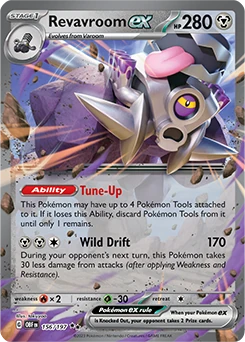
Spidops ex · 019/198Scarlet & VioletPidgeot ex · 164/197Obsidian FlamesRevavroom ex · 156/197Obsidian Flames
Illus. takuyoa · Images: Pokémon
Plate 04 · 3D model, 2D finishing
takuyoa
I try to make my illustrations as cool as possible.
takuyoa has illustrated Pokémon TCG cards since 2021, mainly Pokémon ex, and says he builds as much as he can in 3DCG, then finishes in 2D [11]. On Pidgeot ex he adjusted the face in 2D [11].
Look forOn Pidgeot ex, find where the Pokémon seems to leave the frame. On Revavroom ex, look at how the metal body and the tires are drawn.
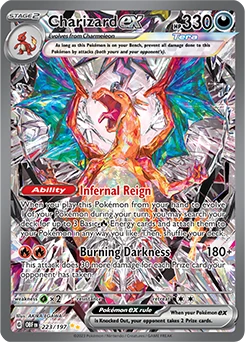
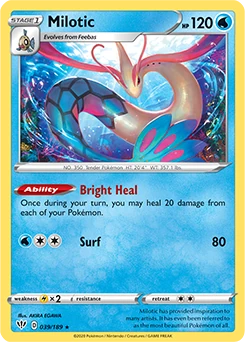
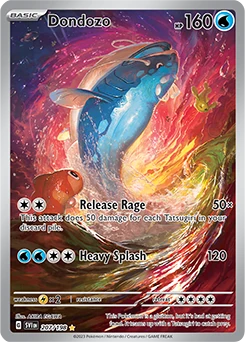
Charizard ex · 223/197Obsidian Flames · Special Illustration RareMilotic · 039/189Darkness AblazeDondozo · 207/198Scarlet & Violet · Illustration Rare
Illus. Akira Egawa · Images: Pokémon
Plate 05 · A Pokémon's life, made cool
Akira Egawa
To me, showing a Pokémon’s “life” is the most important thing.
In an official process interview about her Milotic, Egawa says she asks where a Pokémon lives, how it lives, what its strengths are and what its struggles look like, then tries to make the answers look cool [8].
Look forAsk of each card, Milotic, Charizard ex, Dondozo, where the Pokémon seems to live and what it might be up against.
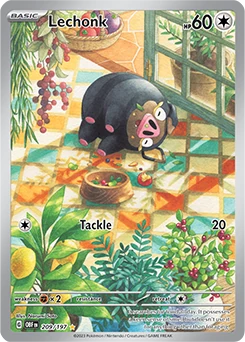
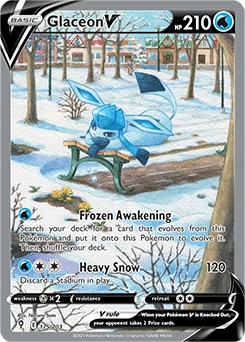
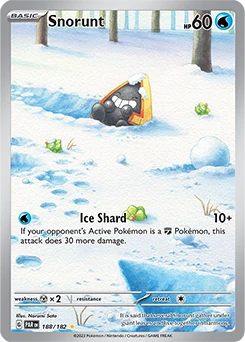
In an official conversation, Sato says many of her works end up capturing Pokémon's daily lives. For her Glaceon V she imagined what it eats for breakfast, what it does by day and where it sleeps, then chose one scene [9].
Look forLook at Glaceon V and ask what happened just before this scene. Then compare Lechonk and Snorunt: which feels most like an ordinary moment?
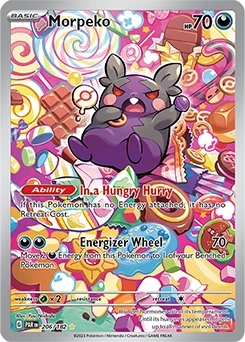
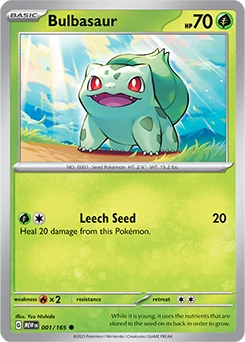
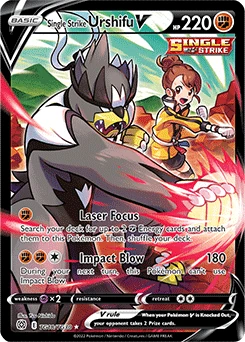
The contest article introduces Nishida as the winner of the first Pokémon Card Game Illustration Grand Prix and a Pokémon TCG official illustrator since 2019, whose creative goal is illustrations that fill the viewer with warmth [10].
Look forCompare Morpeko, Bulbasaur and Urshifu V. Which feels warmest to you, and what in the picture makes you say so?
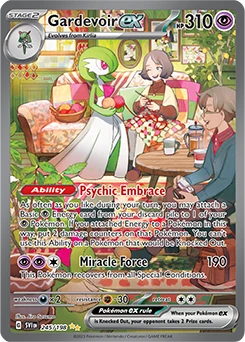
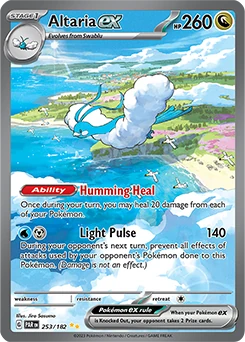
Gardevoir ex · 245/198Scarlet & Violet · Special Illustration RareVaporeon · TG02/TG30Brilliant StarsAltaria ex · 253/182Paradox Rift · Special Illustration Rare
Illus. Jiro Sasumo · Images: Pokémon
Plate 08 · A world where Pokémon exist
Jiro Sasumo
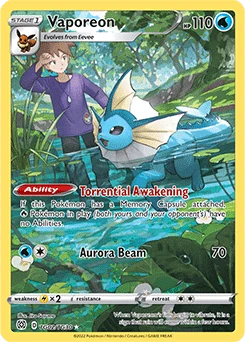
My goal is to draw illustrations that look like portrayals of a world where Pokémon really exist.
The contest article introduces Sasumo as the winner of the second Pokémon Card Game Illustration Grand Prix, and says his creative goal is to let viewers feel the atmosphere and story of a scene as if they were there [10].
Look forOn Gardevoir ex, Vaporeon and Altaria ex, find one detail that could belong to a real place. What story does the scene suggest?
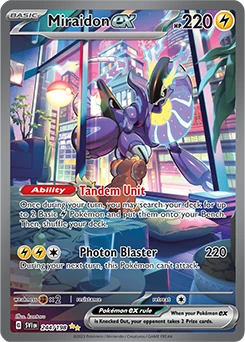
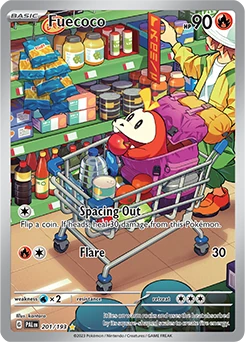
Miraidon ex · 244/198Scarlet & Violet · Special Illustration RareFuecoco · 201/193Paldea Evolved · Illustration Rare
Illus. kantaro · Images: Pokémon
Plate 09 · The charm of a living creature
kantaro
As a Pokémon Trading Card Game illustrator, my goal is to convey the charm of each Pokémon as a living creature as much as possible.
The contest's judges page lists kantaro as an illustrator judge. It says he has illustrated for the Pokémon TCG since 2022 and has worked in fields including illustration, music videos and clothing design [7].
Look forCompare Miraidon ex with Fuecoco. Where does each Pokémon's personality show: in the face, the pose or the world around it?
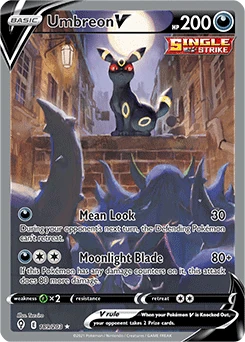
The judges page lists Teeziro as an illustrator judge. It says they began drawing for the Pokémon TCG in 2021, with Sword & Shield—Chilling Reign, and are now a full-time freelance illustrator [7].
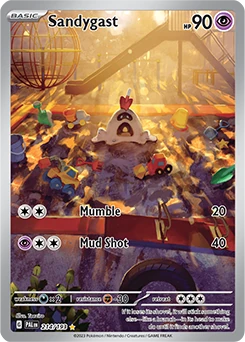
Look forOn Sandygast and Umbreon V, ask what mood each picture sets. Which details make you smile, and which make you linger?
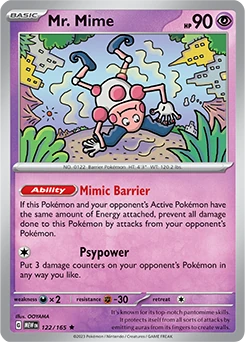
Mr. Mime · 122/165Scarlet & Violet—151
Illus. OOYAMA · Image: Pokémon
Plate 11 · How fun and interesting it is
OOYAMA
I tend to focus not only on how well an illustration is drawn but also on how fun and interesting it is.
The judges page describes OOYAMA as an illustrator and game designer who was part of the team that initially designed the Pokémon TCG, and says Dr. OOYAMA, a character on some Japanese cards, was based on him [7].
Look forMr. Mime stands alone here. What makes this picture fun or interesting to you, and how does it differ from the cards around it on the wall?
Pokémon's official images of Magnemite 081/165 and Magneton 082/165 from Scarlet & Violet—151 both carry the credit “Illus. Yuka Morii”. [1][2] To us, the backgrounds look like photographs of real places. That is our observation as viewers, not a documented method.
Look forWhere your attention goes first, how the setting changes your sense of scale, and what you would lose if the background were removed.
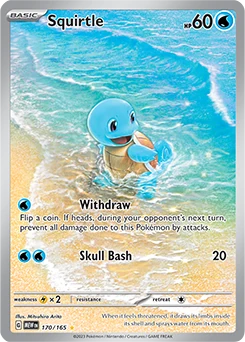
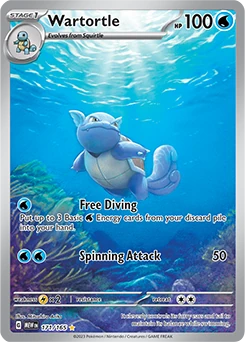
In the contest interview, Yuu Nishida names Mitsuhiro Arita as an artist whose works she deeply enjoys [10]. The two cards shown carry his printed credit.
Yuu Nishida on Arita’s work“His detailed illustrations make you believe you are looking at a living creature.” [10]
Look forCompare Squirtle and Wartortle. How much detail can you find in each, and does either feel like a living creature to you?
03
What happens before the picture reaches a card?
The finished work belongs to a directed production process. In an official interview, art director Satoru Nagaya says card production is mostly up to Creatures Inc., which brings in outside illustrators for the artwork. Illustration director Haru Saito says the featured Pokémon must be drawn as the main character and fit the atmosphere of the Pokémon world, and that after that she wants to see the illustrator's individuality. [6]
Furusawa's Arcanine shows what that looks like. He was told the single mountain in his draft could read as a specific real or in-game peak, and that a more generic mountain range would fit the world better. [4] That is why a behind-the-scenes interview can say more than a label such as “cute” or “realistic”: it shows a specific person solving a specific visual problem.
Documented process“The artist says they used these materials.”
A viewer's response“This picture feels nostalgic to me.”
Both are interesting, but they are different kinds of statement. The interviews record what the artists said at the time; they do not show that an artist uses one method for every card.
04
Spend another minute with the artwork
You do not need art-school vocabulary to look more closely. Try these questions with a card you own or an official image, like this one.
Illus. Atsushi Furusawa · Image: Pokémon
The first thing you noticeWhat draws my eye: the face, a strong color, an action, or the setting?
The Pokémon's poseWhat might have happened just before this moment?
The surroundingsWhat does the background add to the scene?
The viewpointAm I looking down, up, or from the creature's level?
The use of spaceDoes the picture feel crowded, quiet, expansive or intimate?
The second lookWhat detail did I miss the first time?
Viewing prompts, not hidden-story claims. If two cards seem to belong to the same story, enjoy the connection, but leave room for uncertainty unless a source confirms it. For a shared activity, have each person pick one favorite from the same group of cards and explain why before anyone looks at rarity labels.
“I enjoy cards where the Pokémon seems comfortable in its surroundings” is a useful collecting direction: specific enough to guide your next discovery, broad enough to leave room for surprises.
05
Build one page before building an entire collection
An art collection needs a theme you enjoy and a stopping point you can recognize. It does not need to be a master set. Three possible nine-card projects; the numbers are suggestions, not requirements.
One artistNine works credited to an illustrator you like.Boundary: choose favorites rather than every printing.
One Pokémon, different eyesNine pictures of a favorite Pokémon by different artists.Boundary: record the exact expansion and card number.
One mood or settingNine scenes you connect with: rain, rest, food, forests, city life.Boundary: explain the connection in one sentence.
Start with pictures you already own. Add possible choices to a list, and decide what you are comfortable spending on the whole page before buying anything. If your goal is a particular illustration, buying singles keeps the purchase attached to the picture you chose. Opening packs can be its own enjoyable activity, with a separate budget.
Decide, too, what “complete” means for the page: one copy of each illustration, or several finishes and printings? You can also leave a space empty. A page is not more personal because you filled its last slot with a card you do not like.
06
Keep exploring through the people who make the cards
The credit on the cardFor the illustrator's name. [1]
Pokémon's interviews and art featuresFor artists' accounts of their choices and working methods. [3][4][6]–[11]
The official checklistsFor exact card names and numbers. [2]
Art director Nagaya describes collecting as one way to enjoy the cards, including trying “to gather cards featuring your favorite illustrator.” [6] Keep a short note as you explore: the card, the artist, and what caught your attention. Over time, those notes can show you what your collection is really about.
Your next favorite does not have to replace your favorite Pokémon, belong to the newest expansion, or be someone else's chase card. It only needs to give you a reason to look again.
Sources
All sources are Pokémon's own publications or its officially sponsored illustration-contest site. Sources 1–6 read October 30, 2026; sources 7–12 read October 31, 2026. Card images: Pokémon, from its official card images; the illustrator is credited under each.
Pokémon official card images, Scarlet & Violet—151 numbers 081 (Magnemite) and 082 (Magneton), assets.pokemon.com. Each shows its printed illustrator credit.
Pokémon official card images and set checklists (assets.pokemon.com) for every card shown. Each image shows its printed illustrator credit. Rarities come from the legend on each checklist (Scarlet & Violet—151, Scarlet & Violet, Paldea Evolved, Obsidian Flames, Paradox Rift); Sword & Shield and Trainer Gallery cards carry no rarity claim.